
by Candace Walker
I didn’t start Generation Connect as a business idea.
I started it as survival.
Picture this. A single mom. A multigenerational household. Teenagers who move at the speed of WiFi and a seasoned adult who just wants the phone to stop asking for updates every five minutes. Same house. Same table. Completely different worlds.
Or so I thought.
What I actually witnessed changed everything.
It wasn’t a gap. It was a missed connection.
The Lie We’ve Been Told About Aging
Somewhere along the way, we accepted a quiet narrative. That aging means falling behind. That technology belongs to the young. That older generations are recipients of help instead of contributors to progress.
That story doesn’t just flatten people. It disconnects us.
Because what I saw in my own home and later across communities was something very different.
Seasoned adults are not “behind.” They are carrying decades of lived experience, decision-making, cultural memory, and resilience. They have navigated systems that didn’t always welcome them and still built families, careers, movements, and legacies anyway.
And teens? They are not just “digital natives.” They are searching for purpose, structure, and a place where they are seen as capable of contributing something meaningful.
Put those two together and something powerful happens.
Not charity. Not assistance.
Exchange.
What We Get Wrong About Help
Let’s be honest. Most “help” models for aging and technology are broken.
We rely on adult children who are busy, impatient, or simply unavailable. The interaction becomes rushed. Frustration builds. Questions go unasked.
Workshops exist, but they are often one-time events. Information comes fast and disappears even faster.
And when seasoned adults try to figure it out alone? That can lead to confusion, vulnerability to scams, or complete disengagement.
So the issue isn’t ability.
It’s access. It’s repetition. It’s trust. It’s having someone who will sit with you long enough for it to click.
What Happens When You Change the Model
Now imagine a different scenario.
A teen sits inside a screen across from a seasoned adult who may be in a community center, or in the comfort of their home.
“Show me how to send a picture.”
Five minutes turns into fifteen. Fifteen turns into a conversation.
“Where did you grow up?”
“What was it like back then?”
“How did you handle things without all this technology?”
Suddenly, this isn’t just about a phone.
It’s about story.
It’s about being seen.
It’s about realizing that both people in the room have something the other needs.
I’ve watched teens who barely made eye contact walk into leadership. I’ve watched seasoned adults who were hesitant to touch their devices become confident enough to teach someone else.
That’s not a tech lesson.
That’s transformation.
Legacy Is Not a Concept. It’s a Practice.
We talk a lot about legacy, especially in Black communities.
But legacy is not something you leave behind.
It’s something you actively build in real time.
Every time a seasoned adult shares a life lesson, a workaround, a story about how they navigated something hard, that is legacy in motion.
Every time a young person learns patience, empathy, and how to communicate across difference, that is legacy being received and reshaped.
This is what we mean when we talk about intergenerational connection. It’s not symbolic. It’s functional.
It strengthens families.
It builds community.
It creates continuity.
The Cultural Power of Staying Connected
For Black communities specifically, this connection is not optional. It’s foundational.
We have always relied on intergenerational wisdom to move forward. Knowledge passed down at kitchen tables, in living rooms, at church, in neighborhoods.
But modern life has disrupted that flow.
Geography, schedules, technology, and even fear have created distance.
Rebuilding that bridge is not just about technology. It’s about restoring something cultural.
Because when we lose connection between generations, we lose context.
And when we lose context, we risk losing ourselves.
What I Know for Sure
After building this work, after sitting in rooms where laughter replaces frustration and confidence replaces hesitation, I know this:
Aging is not a decline. It is a continuation.
Young people are not the future. They are the now.
And the strongest communities are the ones where both are in conversation.
The Question We Should Be Asking
Not “How do we fix aging?”
But:
What becomes possible when we stop separating people by age and start connecting them by value?
Because when we do that, we don’t just teach technology.
We build something much bigger.
We build understanding.
We build dignity.
We build legacy, together.
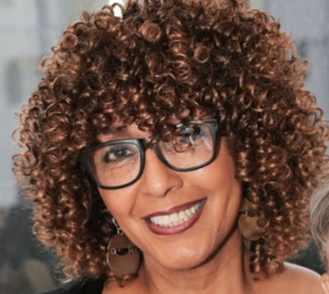
Candace Walker is the founder and CEO of Generation Connect, Inc., a social impact company that brings teens and seasoned adults together for technology engagement and intergenerational connection. As a single mom leading a multigenerational household, she experienced firsthand the power of bridging generational gaps and now works to scale that impact across communities.