
Black institutions are not just part of the story of aging in America. They may be the most underutilized infrastructure we have for shaping it.
I saw that clearly in a moment I did not plan.
It happened in a brief exchange, no more than fifteen minutes, with six young men who had just become members of Kappa Alpha Psi Fraternity, Inc. It was my first time wearing a white blazer, marking fifty years of membership in the fraternity. That alone carried weight for me. But what made the encounter meaningful was not the recognition. It was the connection.

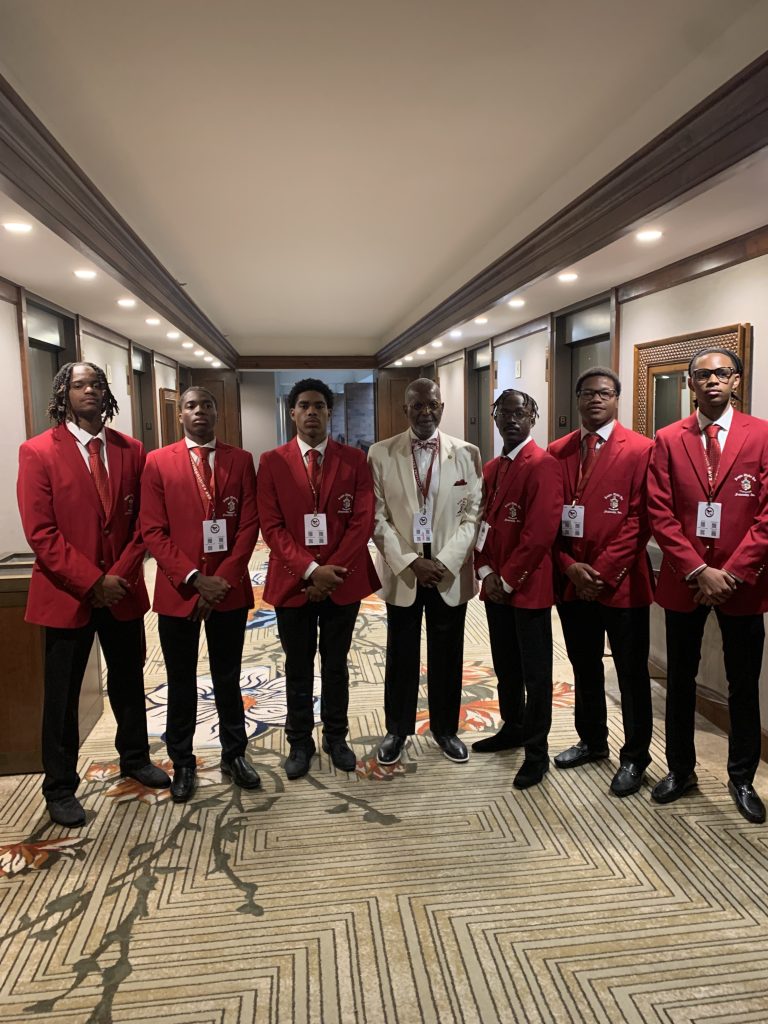
These were young brothers at the beginning of their journey. I stood before them representing five decades of mine. What passed between us was not instruction or ceremony. It was something quieter, but deeper. It was recognition.
They saw something in me that reflected what was possible for them. In them, I saw the continuation of something I have been part of for half a century. In that brief exchange, time collapsed. The distance between beginning and becoming did not feel distant at all.
That experience stayed with me as I entered a room later that day in Dallas, Texas, filled with Senior Kappas from across the Southwestern Province during the Senior Kappa Summit. What unfolded there helped me name what I had just experienced.
We were not discussing aging as a topic. We were seeing ourselves across time. We were recognizing what it means to belong to one another across the lifespan. And that recognition brought a larger question into focus.
In the age of longevity, what is the role of our historical Black institutions in how we age, how we care, and how we lead? That question is no longer theoretical.
Aging is not happening at the edges of our communities. Black elders are living longer and, in many cases, carrying more. They are navigating health challenges, caregiving responsibilities, financial strain, and the emotional weight of watching hard-won progress face new pressure. At the same time, they remain central to our political power, family stability, spiritual life, and ongoing work for justice.
Yet in too many of our institutions, aging is still treated as an add-on. It appears as a ministry, a program, or an occasional moment of recognition. These efforts reflect care. But they do not change how institutions operate. They leave aging at the margins rather than placing it at the center of how we think, plan, and lead. That is the gap.
Black institutions have always done more than we have fully named. They have educated, organized, protected, and sustained us across generations. They have carried elders through illness, loss, and transition. They have preserved memory and shaped identity in ways no external system could replicate. But we have not organized ourselves around aging.
Members are aging in real time. Wisdom is accumulating. Trust is already embedded across generations. Even with all of that, aging is rarely treated as a driver of sustainability. It is treated as a category to manage rather than a reality to design for. That has consequences.
It means we underuse the very people who hold our history and perspective. It means we fail to design for continuity across generations. It means leadership capacity, built over decades, too often sits just outside the center of decision-making.
This is not about blame. It is about recognizing the frame we have inherited.
For a long time, aging in America has been understood as a late-life issue and an individual responsibility. Prepare yourself. Take care of your health. Make the right choices. Institutions respond by offering services around the edges rather than rethinking their role across the full arc of life. When aging is framed that way, the most we can imagine is doing more for older members.
But what if we approach this differently?
Aging is how people move through time together. Institutions are not peripheral to that experience. They shape it. That is the shift.
It shows up in practical ways. Membership is no longer tied to a stage of life but understood as a lifelong journey. Leadership is no longer a one-directional flow but an exchange across generations. Budgets, policies, and partnerships begin to reflect the reality that people remain connected and essential over time.
This is not a call for more programming. It is a call to redefine the role of Black institutions in the age of longevity. Brotherhood has never been about a particular age. It has always been about continuity.
What is changing now is a willingness to treat aging as a core strategy rather than informal care. Across Kappa Alpha Psi, there is growing work to organize around lifelong brotherhood and lifelong thriving. That means intentionally building intergenerational leadership where undergraduates, alumni, and Senior Kappas share responsibility for the life of the fraternity. It means paying attention to social connection, health, purpose, and financial security together. And it means recognizing that brothers 55 and older are not on the sidelines. They are anchors whose experience should help shape where we go next.
The conversations at the Senior Kappa Summit made this clear. Brothers spoke candidly about health, caregiving, finances, loss, gratitude, and the desire to remain useful. What emerged was not a request for more activity. It was a desire to remain essential. That is the shift we are being invited to make.
The question is no longer what we owe our older members. The question is what becomes possible when we organize around who they already are.
Kappa is evidence, but it is not the whole story. The deeper question is what happens when other Black institutions make the same turn.
At HBCUs, generations already share space in ways often taken for granted. Students, alumni, faculty, and surrounding communities form living networks of relationship and influence. These campuses hold the potential to become more intentional intergenerational environments where elders are not occasional speakers but integrated mentors, teachers, and advisors, and where aging is part of the educational mission.
In Black churches, the reality has long been visible. Congregations show up in moments of illness, caregiving, grief, and transition. They organize support, sit with families, and carry one another through life’s most difficult seasons. This work is not secondary. It is central. The opportunity now is to recognize it as such and strengthen it with training, partnerships, and alignment with broader systems.
In fraternities and sororities, there are established networks of leadership, service, and lifelong connection that can be activated more intentionally. These organizations have the structure to become hubs of intergenerational engagement, places where relationships are cultivated and members are supported across the full arc of life.
And in organizations like the NAACP and the National Urban League, elders carry decades of experience in advocacy, organizing, and strategy. Their voices are not simply part of the story. They are essential to shaping what comes next.
When we begin to see Black institutions this way, aging no longer appears as a scattered set of services. It becomes infrastructure. It becomes the way we move through time together.
We are navigating political volatility, organized disinformation, and ongoing challenges to the rights and dignity of Black communities. Economic pressure is being felt across generations. In this environment, Black elders are not a side constituency. They are stabilizers, strategists, and carriers of memory.
If we truly see elders as strategic assets, that belief must be reflected in how our institutions are designed. It must show up in who has influence, how decisions are made, and where resources are directed. Insight will not be enough. This moment calls for expectation.
Aging must be intentionally designed across the lifespan. Membership must be understood as lifelong engagement. Intergenerational leadership must be built, not assumed. Elders must hold visible and meaningful roles that shape direction, priorities, and culture.
This is not optional work. Demographic shifts are already underway. The broader environment is not becoming easier. Our elders are already living the future we say we want to prepare for.
Kappa Alpha Psi is helping me see what it looks like when a Black institution begins to understand itself as aging infrastructure, a place where people can thrive across the lifespan and where elders are central to that work.
As I look back on that brief exchange with six new members and that room filled with Senior Kappas, I am clear about my assignment.
I did not come simply to offer a workshop.
I came to offer a mirror.