
In every iteration of my mother’s life, she was a strong, feeling Black woman. Whether as a child, growing up on the south side of a steel mill town in Ohio, or a disco diva on the dance floors of Denver – my mother was always Black. I never questioned this fact, or even considered it during my upbringing. My parents were intentional about my Blackness, ensuring I knew who I was and where I came from.
When my mother was diagnosed with frontotemporal dementia in the spring of 2013, my father and I knew nothing about the disease. What I observed over time was the loss of some sense of self in my mother, a degradation of identity. She didn’t always know who my father or I were and the details of her own history became murky. But one thing remained true – she still remained Black.
One evening, we were watching what was supposed to be a sitcom starring an all-Black cast. A scene came across our television which depicted two Black men slapping each other playfully. I laughed at the silly antics, but my mood abruptly changed from levity to shock and concern as my mother yelled at the television: “Stop it!” she said. “You are two Black men! You’ve been through too much to treat each other this way.”
I tried to explain to my mother that they were just playing, that it was acting, and that no one was being hurt. She protested. My mother was experiencing a common symptom of dementia called “sun-downing,” in which a person with dementia may experience severe mood swings, hallucinations, and other disruptive behavioral changes.
At this point, several years into my mother living with dementia, we were accustomed to sun-downing, though it continued to rock our nervous systems. But this time was different. This was specific to her race and an observation of her people, who, in her eyes, were experiencing and inflicting harm upon one another. This disturbance for my mother lasted but a few moments, but highlighted the important role that race-based trauma plays in cognitive decline and how one sees themselves.
Although my family faced racial discrimination in the medical field, with gaslighting and not being believed during the diagnostic process, it never occurred to me that my mother needed protection from imagery that could potentially trigger feelings of fear, anger, and deep grief around race and the way our people have been harmed by systems of oppression.
My mother was a beautiful, Black woman, committed to her crafts as an entrepreneur and a homemaker. My mother was a strong, Black woman, who supported her sickly Black daughter and high school-sweetheart husband through all of their challenges with love and resilience. My mother was a Black woman who lived with a disease that never let her forget that she was a Black woman.
In fact, I believe that dementia removed my mother’s filter, though she oddly maintained her ability to code switch. She was keenly aware of the presence of others – particularly white people – and often attempted to mask her dementia-related deficits. It was fascinating to watch her transform, to the extent that she could, to fit into an “acceptable” countenance. It also saddened me to see that she was not free to just exist in her latter years. I am grateful, however, that despite delusions and hallucinations, when she was lucid and aware, she felt safe enough to exist as her Blackest self with her family. I am happy that she trusted my father and me to love her as is. I am grateful she felt safe in our home, where she was privileged enough to age and transition.
It is now my goal to help people of color access the resources and services they need to live in their truth with culturally sensitive providers and programs. I recently founded a 501(c)(3) nonprofit organization, Caregivers of Color Collective, aimed at connecting people of color to resources and services designed with them in mind. Our goal is to build out a database of companies, organizations, groups, and individuals that serve the BIPOC community in a way that provides culturally competent experiences. We want people ot feel seen in their lived experiences and never to feel alienated in their time of need.
If I can help just one person of color access the kind of care that edifies them and brings them comfort as they age, I know that I will have done my job. My beautiful Black mother deserved to feel loved for all that she was, and her Blackness was a major part of her lived experience. It is my hope that Blackness can be a source of pride, strength, and softness, no matter what life looks like as we age.
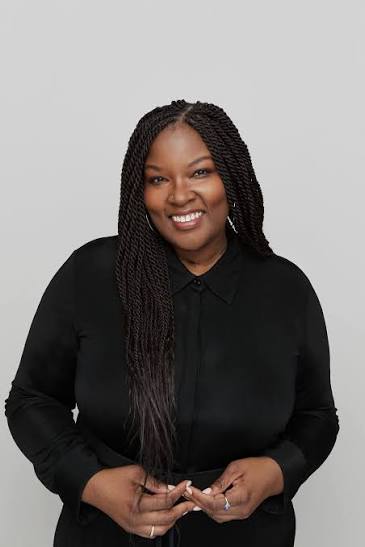
Aisha Adkins, MPA, CNP is an Atlanta-based family caregiver, founder, writer, thought leader, speaker, and organizer who is passionate about building an equitable, inclusive, and comprehensive public health and care infrastructure using media, storytelling, and culture and policy change. Her versatility has enabled her to publish works both in academic journals and popular publications. She is committed to making an impact across the country for unpaid caregivers of color through her new venture, 501(c)(3) Caregivers of Color Collective.